Sometimes, it’s less about where you’re going than who you’re with. Unless you really got to pee, then it’s all about that bathroom. Melina, Shannon, this one’s for you—Merry Christmas and cheers to 2020!
Valle de Guadalupe, Baja California
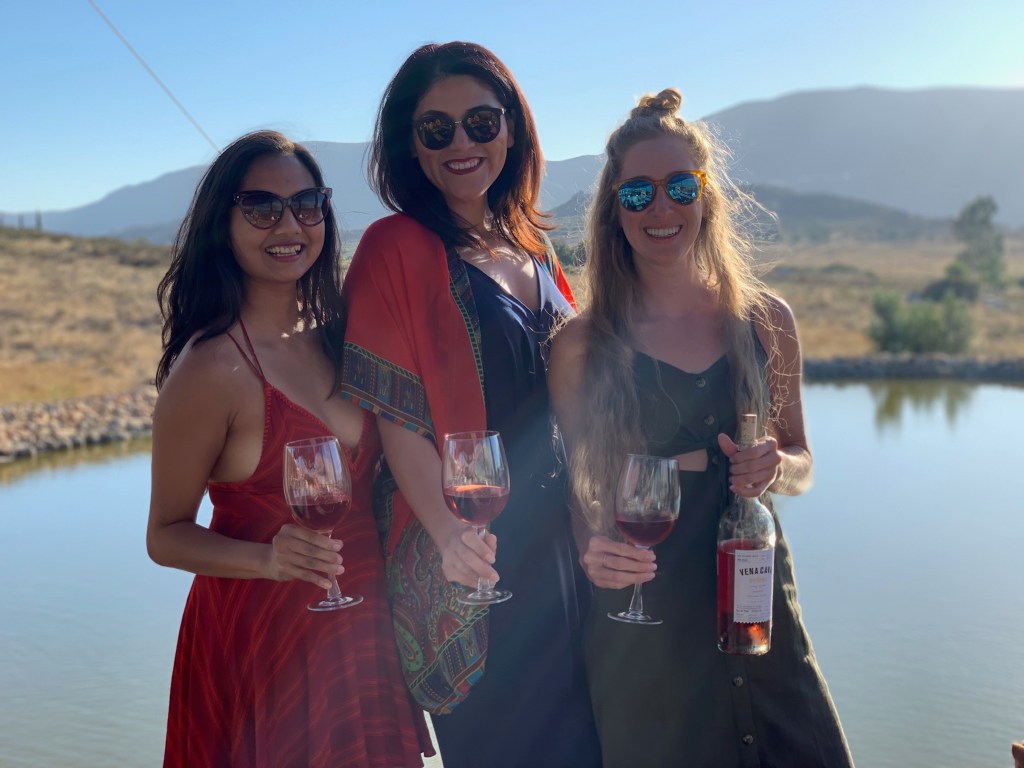
By the time we groaned across the border into San Diego, a welcome stretch of U.S. highway open in front of us like a first spring bloom, it was 5 p.m. At 9 a.m. one hot summer Sunday in Tijuana, our 4Runner pulled into a line leading up to U.S. border control that snaked around street corners and across bridges. And then we stopped, completely. We were optimistic, naive rather—maybe we’ll have time to squeeze in brunch before some of us continued north, we thought. After eight hours, interminable stops and starts, time wore us down, but not enough to wipe away weekend memories created just days before. While we waited, and waited, we dipped into this fresh well of memories from a long weekend in Baja California—the eponymous state and peninsula that slices through the Pacific and Gulf of California—to sustain us.
Admittedly, I knew very little about the power struggle over Kashmir before I read The Far Field. So I dug. Completing the book led me to this Al Jazeera video illustrating how the subcontinent of India has changed since 1947, the year India gained independence from Britain. Reading The Far Field also piqued my interest in watching the movie Viceroy’s House, currently on Netflix, about the final events leading up to Britain’s retreat from its colonies that year, and how religious conflict between Indians lead to partition, the event that would initially create Pakistan, for India’s Muslim minority. This decision would also cause the largest mass migration in history, according to the BBC. An internet search for more information about Kashmir results in reporting as recent as August 2019, describing frequent clashes in the area.
The Far Fieldis a lyrical historical fiction novel, and stories that string moving prose rooted in real events are my favorite. Narrated by a now 30-year-old Shalini, our protagonist, the book shifts between her privileged childhood, and adolescence. When the book opens, we meet our protagonist at home in Bangalore, who feels adrift following her mother’s death. She is barely an adult, working her first job out of college.
She seems apathetic, and I’m not sure if it’s because our protagonist generally lacked ambition, or because young adults are generally unsure of themselves, or if her current state was a product of grief. We also sense distance between Shalini and her father, who is considering re-marrying. Amid the upheaval, as if Shalini were either running away from her issues, or conversely, confronting them directly, she sets off for Kashmir solo, seeking answers to her mother’s death.
Shalini’s childhood is set against the background of decades-old conflict between India and Pakistan over Kashmir. When she decides to pursue her mother’s past, and specifically, the charismatic salesman who used to visit their home in Bangalore, Shalini finds herself caught up in tensions. Throughout the chapters, we wince at how her blinding lack of self-awareness and nuance cost the people around her much more than what she thought she had to lose.
Shalini’s present-day journey to Kashmir and her interactions with the people she engages with along the way illuminate India’s stark and complex social dynamics. Yet, what resonated with me the most were the familial scenes, the flashbacks to moments with her mother and her struggle to understand a woman who had the capacity to lift her up and destroy her in the same breath. In one instance, Shalini describes the power her mother had over others, “…she had an exquisite instinct for zooming in on his frailties.” To me, these moments, sprinkled throughout the book, felt psychologically exacting and, most unnervingly, eerily familiar.
Support my immersive, sensorial travel and food journalism: send me a coffee!
*Some links are affiliate links, which means that if you sign-up or purchase I may receive a small commission,but all opinions and product selections are my own.
Before the power went out in Café La Haye, I was savoring a tomato and burrata appetizer drizzled in a vinaigrette that exploded with sweet, creamy flavor. You could have served it to me as dessert and I’d have been satisfied. The brief blackout was scheduled, and a typical occurrence in Sonoma at this time. Earlier that afternoon, I was holed up in a wine cave made from blasting into solid volcanic rock at Repris Winery, where I partook in a crash course in all things California cheese.
After tasting, carving cheese, to touring local, multi-generational dairy farms with immigrant roots… and tasting more cheese, I’m back in San Diego for a short while before boarding another plane to Japan, and Hawai’i. And while I’ll kick off fall with travel, I’m happy to reflect on nearly an entire summer (save for a quick trip to Tulsa, and this latest jaunt up north) spent in San Diego.
Brunch spread during a quick trip to Tulsa, Oklahoma
This summer, I’ve filled my free days with friends, charcuterie-stocked beach days, pilates and yoga sculpt classes, dinner parties, and writing about San Diego. In case you missed it, here are some bylines, published over the last several months, all about San Diego:
For Here magazine, I wrote about several can’t-miss museums in San Diego, including the Museum of Photographic Arts. I was impressed with the curatorial team’s mission to feature artists and works beyond the Eurocentric lens, as well as to make the museum-going experience less intimidating.
And for Modern Luxury, I penned a restaurant review of Fort Oak restaurant in Mission Hills, which has quickly become one of my favorite restaurants in San Diego at the moment
Connect with The Curious Passport
Keep up with my real-time travels and eats from San Diego and beyond on Instagram


 the curious passport